Does Detailing A Car Remove Scratches? (Explained)
If you have ever run your hand across your car and felt those tiny lines catch under your fingertips, you have probably wondered the same thing most of our customers ask us. Does detailing a car remove scratches? The short answer is that it depends on the type of scratch, but detailing CAN handle a lot more than people expect. At Aj’s Auto Detailing in San Luis Obispo, we deal with scratches of all shapes and depths every single week.
In this guide we will break down exactly what detailing does, which scratches come out and which do not, and how the process works. By the end you will know what to expect before you hand over your keys or roll up your sleeves at home.
What Does Car Detailing Actually Involve?
Detailing is way more than a quick car wash. A proper detail is a deep, careful cleaning and restoration of both the inside and outside of your vehicle. The goal is to bring the car as close to showroom condition as possible. Some steps focus on cleaning, and others focus on correcting flaws in the paint and finish.
Here are the main things a full detail usually covers:
- Exterior wash and decontamination to remove dirt, grime, and bonded contaminants.
- Clay bar treatment that pulls embedded particles out of the clear coat.
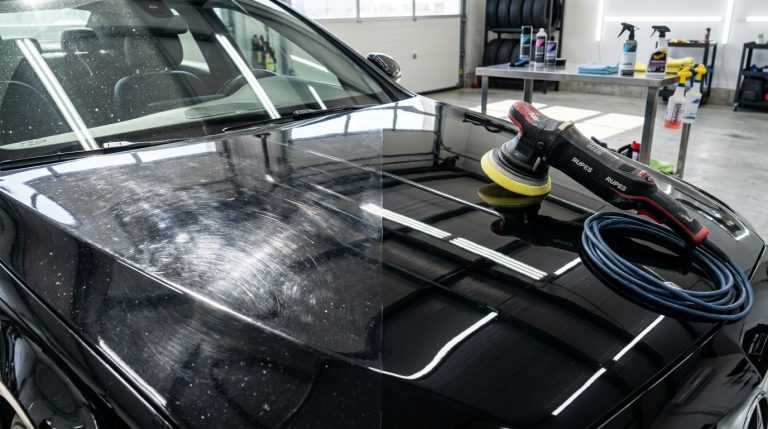
- Paint polishing to smooth the surface and boost shine.
- Interior cleaning including vacuuming, wiping, and conditioning surfaces.
- Wheel and tire cleaning for a fresh, finished look.
- Protective coatings like wax or ceramic to guard the paint.
So while a basic detail cleans and protects, the scratch-removal magic happens during the polishing and correction stages. That is where things get interesting.
Can Detailing Remove Scratches From Your Car?
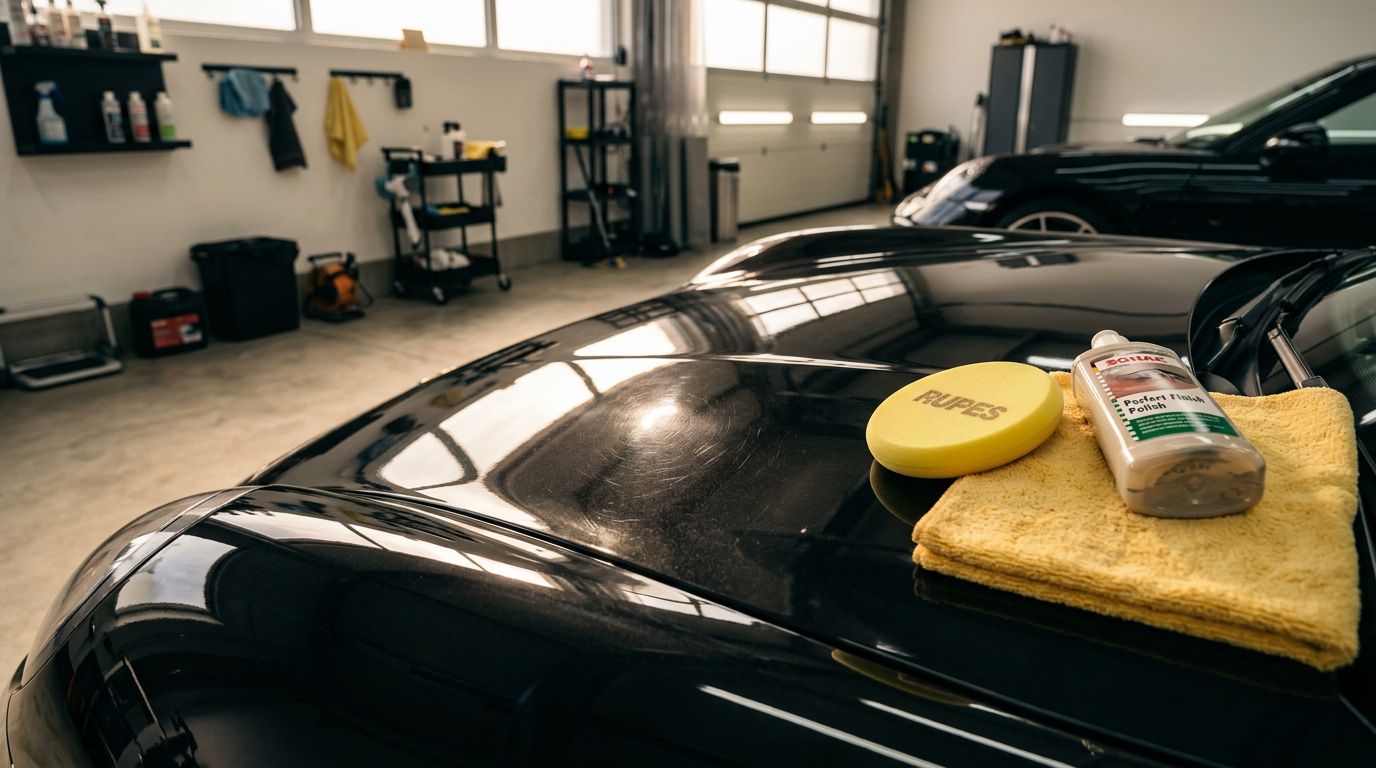
Yes and no. Detailing can remove MANY scratches, but not all of them. The key factor is how deep the scratch goes. Your car’s paint has layers. There is a clear coat on top, then the color coat, then a primer, and finally the metal body. A scratch that only touches the clear coat is usually fixable. A scratch that cuts all the way down to the metal is a different story. If you are dealing with stubborn marks, our team offers dedicated scratch removal in San Luis Obispo to tackle the ones a standard wash cannot touch.
Clear Coat Scratches
These are the most common and the easiest to fix. They only affect the top clear layer. Polishing and paint correction can often make them disappear completely.
Color Coat Scratches
These go a little deeper and reach the paint layer. Some can be improved with correction, but deeper ones may need touch-up paint to look right.
Primer and Deep Scratches
When a scratch reaches the primer or bare metal, detailing alone cannot bring it back. These usually require touch-up paint or professional refinishing to fix properly.
What Types of Scratches Can Be Removed by Detailing?
Not every scratch is created equal. Understanding what kind you have helps set the right expectations. Below are the main types we see and how detailing handles each one.
Swirl Marks
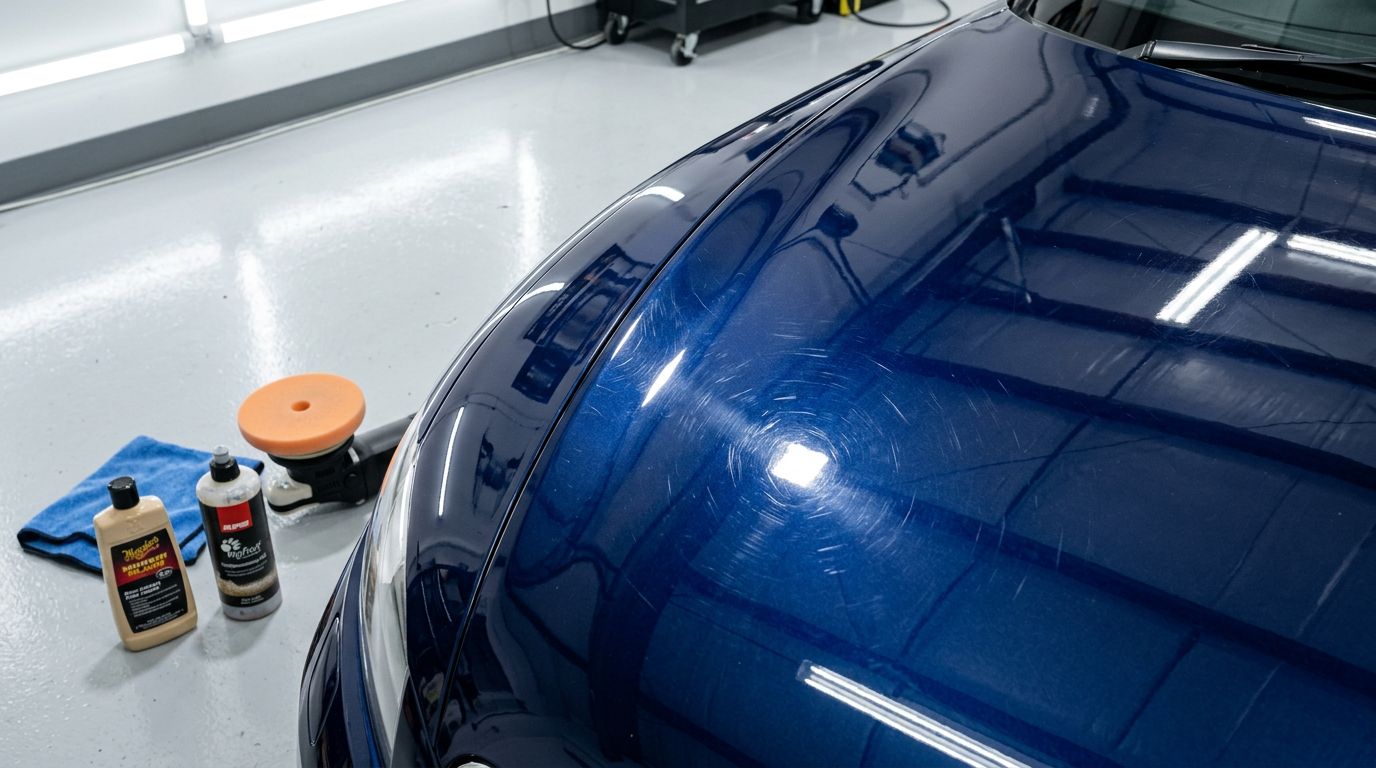
These are the fine, spider-web looking marks you notice under sunlight. They usually come from improper washing or drying. Swirl marks respond REALLY well to paint polishing and correction.
Light Surface Scratches
These sit in the clear coat and often cannot be felt with a fingernail. A good polishing session usually removes them entirely.
Water Spots and Etching
Hard water and minerals can leave marks that look like scratches. Many of these can be buffed out during a detail. If you want to see how a machine polish restores a dull finish, our paint polishing service in San Luis Obispo is built exactly for this kind of surface work.
Deeper Scratches
If your fingernail catches in the scratch, it has likely gone past the clear coat. These can sometimes be improved but not always fully removed by detailing alone.
How Does Paint Correction Differ From Standard Detailing?
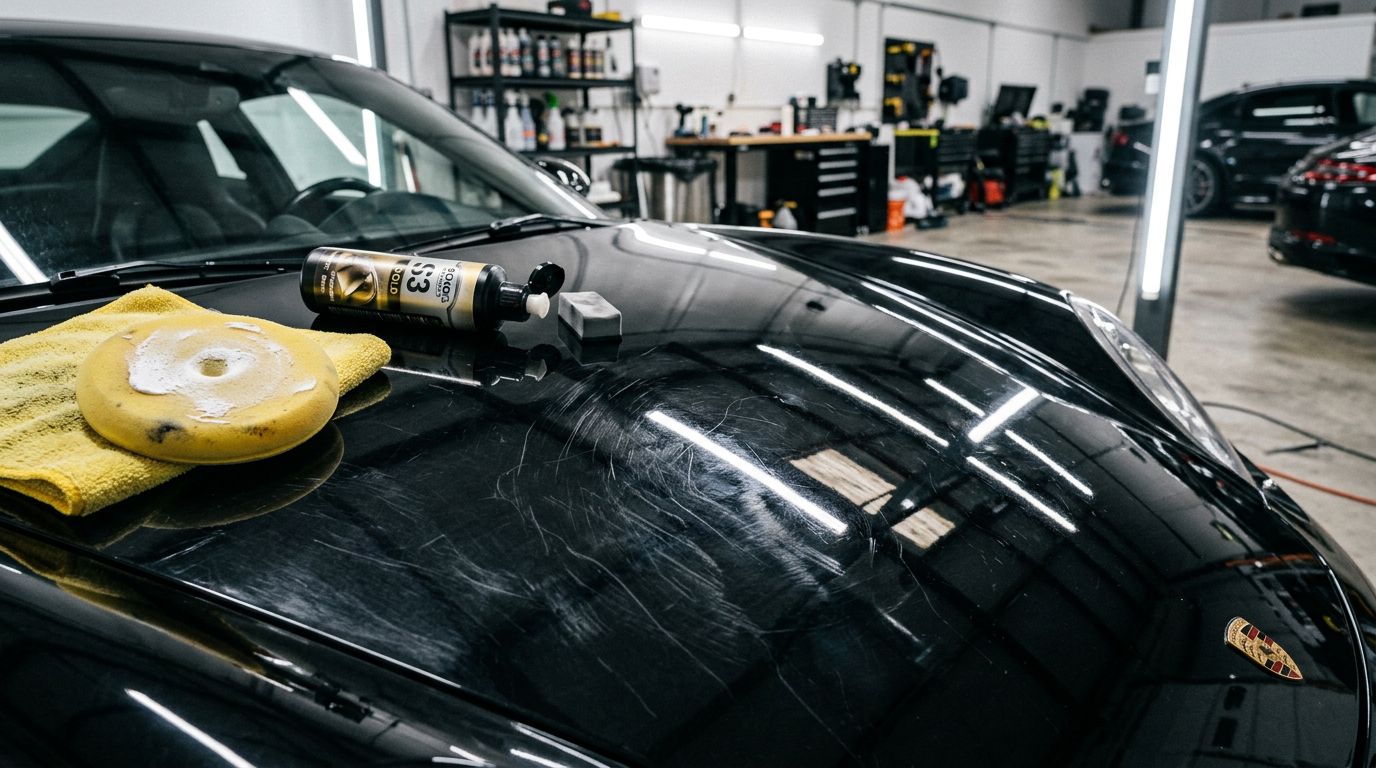
People often mix these two up, but they are not the same thing. A standard detail focuses on cleaning and protection. Paint correction is a more advanced, precise process that specifically targets flaws in the paint. It uses machine polishers, cutting compounds, and different pads to remove a microscopic layer of clear coat and level out imperfections. This is the real heavy lifting when it comes to scratch removal. If your paint has real damage, our paint correction service in San Luis Obispo is designed to bring the finish back to life.
Here is how the two compare:
- Standard Detailing: Cleans, decontaminates, and protects the surface.
- Paint Correction: Removes swirl marks, oxidation, and light scratches at the paint level.
- Standard Detailing: Great for regular upkeep and appearance.
- Paint Correction: Best for restoring damaged or heavily swirled paint.
- Standard Detailing: Usually faster and less expensive.
- Paint Correction: More time-intensive and requires skill and specialized tools.
In simple terms, a detail makes your car clean and shiny. Paint correction makes the paint itself look almost new again.
How Much Does It Cost to Remove Scratches With Detailing?
Cost depends on several things. The severity of the scratches, the size of your vehicle, and how much correction is needed all play a role. A single light scratch is far cheaper to address than full-vehicle correction. Pricing also varies based on the condition of the paint and the level of finish you want. Rather than guess, it is always best to get an inspection so the work matches your car’s actual needs.
Here are the main factors that influence the price:
- Scratch depth and severity. Deeper damage takes more time and effort.
- Number of scratches. One spot costs less than treating the whole car.
- Vehicle size. Larger vehicles have more surface area to work on.
- Type of service needed. Simple polishing costs less than multi-stage correction.
- Paint condition. Heavily oxidized or neglected paint requires extra work.
Because every car is different, the smartest move is to have a professional look at it in person. That way you only pay for what your vehicle truly needs.
Can You Remove Car Scratches Yourself at Home?
You can tackle some minor scratches at home, and plenty of people do. Light swirl marks and shallow surface scratches can respond to store-bought products if you are patient and careful. That said, home methods have limits. Deeper scratches and full paint correction really do need experience and proper equipment to avoid making things worse.
If you want to try it yourself, here is a basic approach for light scratches:
- Wash the area thoroughly. Remove all dirt so you do not grind grit into the paint.
- Dry the surface completely. A clean microfiber towel works best.
- Assess the scratch. Run your fingernail across it. If it does not catch, it is likely shallow.
- Apply a scratch remover or polish. Use a small amount on a foam applicator or microfiber pad.
- Work in small circles. Apply light, even pressure over the scratched area.
- Wipe and inspect. Remove the residue and check your progress.
- Repeat if needed. Multiple light passes are safer than one aggressive one.
- Seal with wax or protection. This helps guard the freshly polished area.
If the scratch is still visible or clearly deep, that is your sign to call in the pros. Going too hard with a DIY approach can burn through the clear coat and turn a small problem into a big one.
Conclusion
So does detailing a car remove scratches? In many cases, YES. Light surface scratches, swirl marks, and water etching often come out beautifully with polishing and paint correction. Deeper scratches that reach the primer or metal usually need more than detailing alone. The key is knowing what type of scratch you are dealing with before choosing your fix.
At Aj’s Auto Detailing, we help drivers across San Luis Obispo, Pismo Beach, Santa Maria, Arroyo Grande, and the surrounding areas restore their paint and protect their investment. If your car needs some love, reach out and let us take a look. We would love to help your vehicle shine again.