Is Scratch Remover The Same As Polish? (Explained)
If you have ever stood in the car care aisle scratching your head, you are not alone. One of the most common questions we hear at Aj’s Auto Detailing is whether a scratch remover is the same thing as polish. The short answer is no, they are NOT the same. But they are related, and knowing the difference can save you money and protect your paint.
We serve drivers all over the Central Coast, from San Luis Obispo to Pismo Beach and beyond. So we spend a lot of time explaining the small details that make a big difference. In this guide we will break down what each product does, how they work, and when you should reach for one over the other.
What Is the Difference Between Scratch Remover and Polish?
Here is the simplest way to think about it. A scratch remover is a product designed to level out or fill in small imperfections in your clear coat. Polish is a broader product that refines the surface, boosts gloss, and removes light oxidation and swirl marks. Both use tiny abrasives, but they are tuned for different jobs.
Scratch removers usually have a slightly heavier cutting action to tackle a specific mark. Polish is often gentler and made to bring out shine across the whole panel. Think of scratch remover as a targeted fix and polish as an overall finishing step. Below is a quick comparison to make it clear.
| Feature | Scratch Remover | Polish |
|---|---|---|
| Main goal | Reduce or hide specific scratches | Refine surface and boost gloss |
| Abrasive level | Usually more aggressive | Usually finer |
| Area of use | Spot treatment | Whole panel or car |
| Best for | Light surface scratches | Swirls, haze, dullness |
| Adds protection | Not typically | Not typically, some have fillers |
How Does Scratch Remover Work on Car Paint?
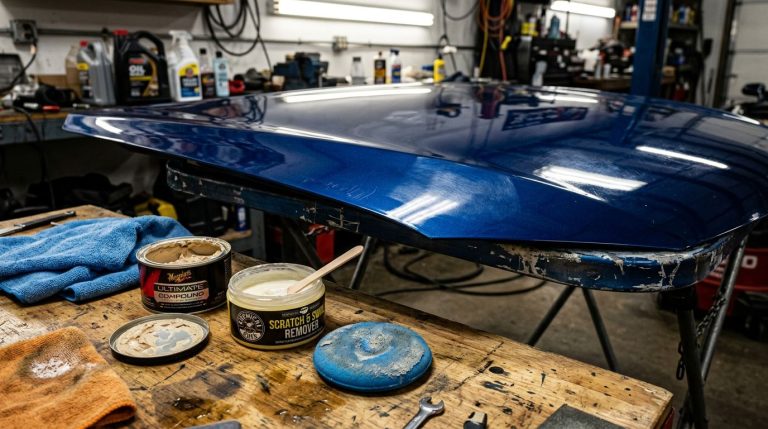
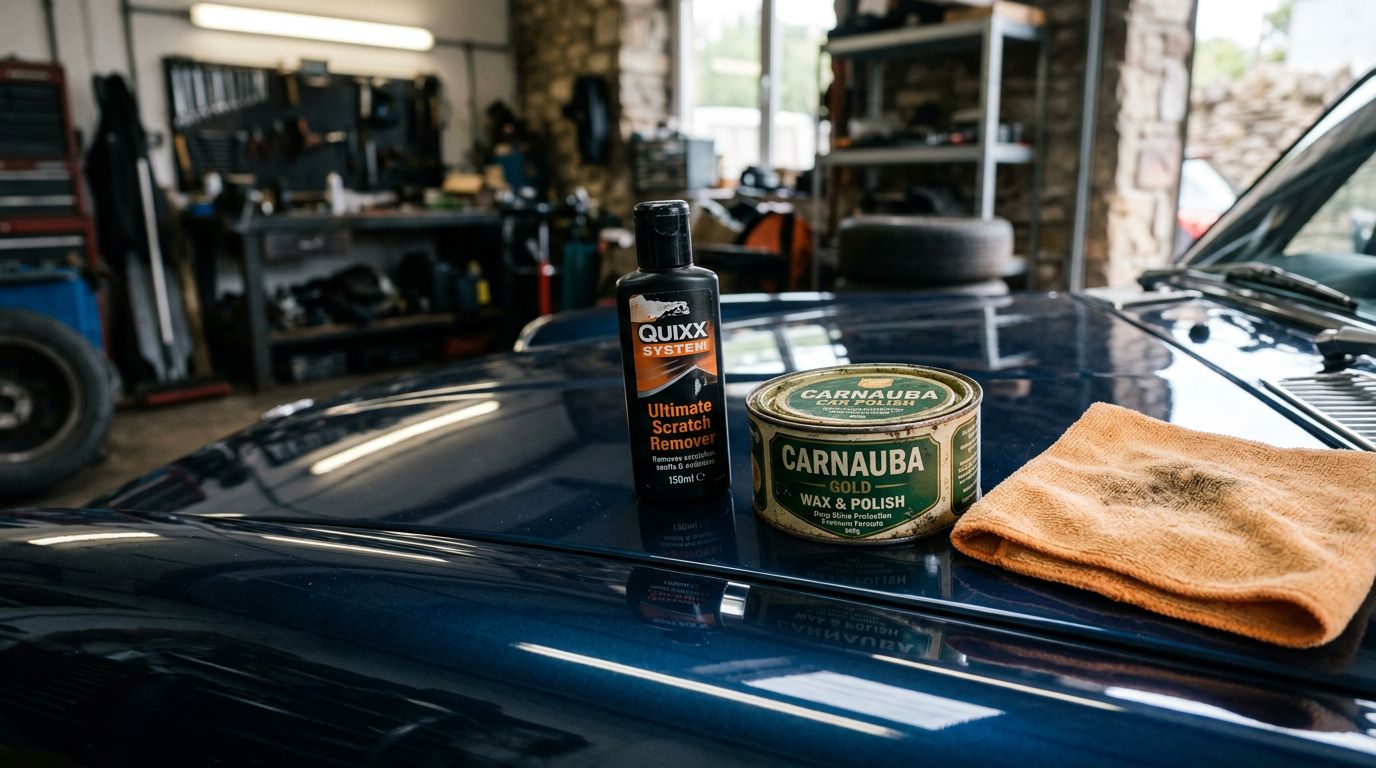
Scratch removers work in one of two ways. Some use fine abrasives to shave down a tiny bit of the clear coat so the scratch becomes shallower and less visible. Others use fillers that sit inside the scratch and mask it temporarily. Many products do a bit of both. The key thing to understand is that most consumer scratch removers only work on scratches that sit inside the clear coat. If your fingernail catches in the scratch, it is likely too deep for a simple remover.
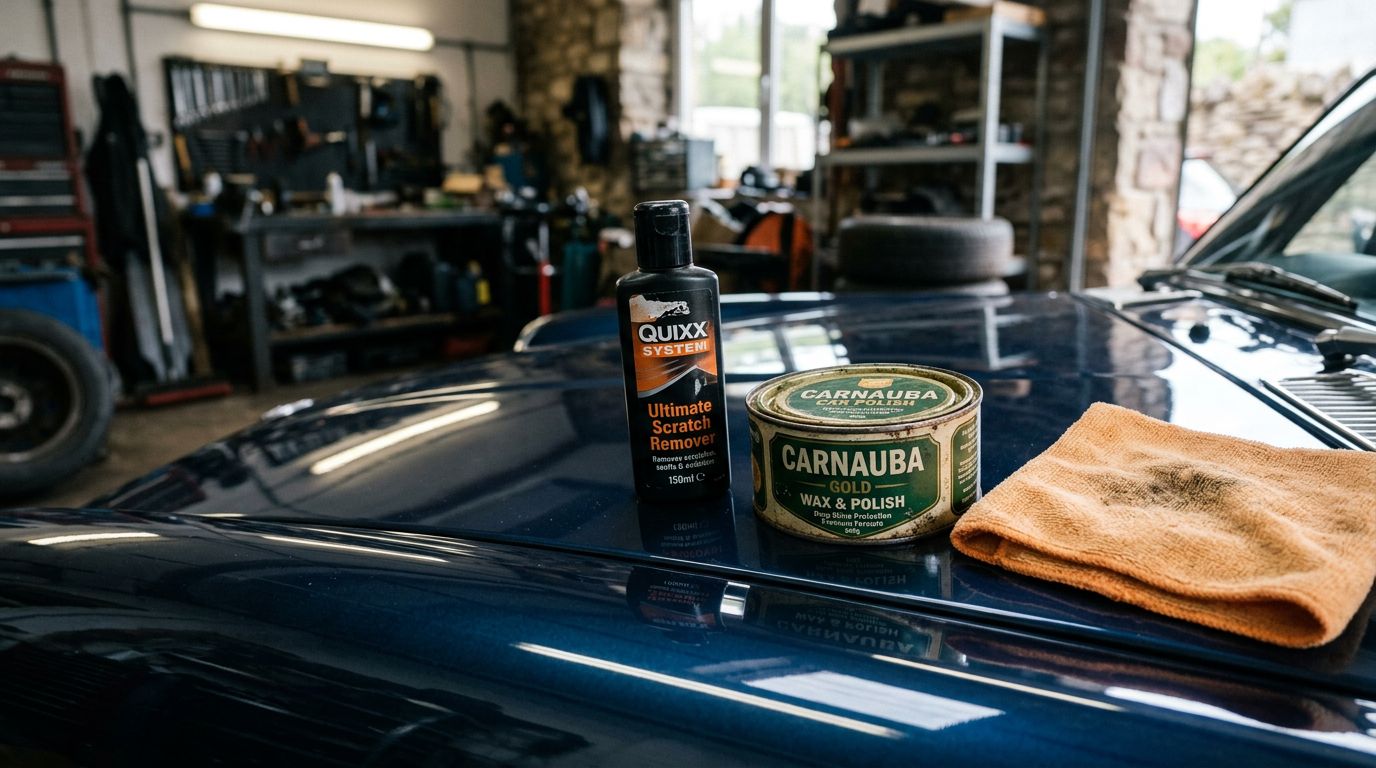
Here is the basic process we follow when treating a light scratch by hand.
- Wash the area thoroughly so no dirt or grit is left behind. Working over grit can create MORE scratches.
- Dry the panel completely and inspect the scratch in good light.
- Apply a small amount of scratch remover to a clean applicator pad.
- Rub the product into the scratch using firm, steady motions. Cross-hatch patterns help.
- Buff off the residue with a clean microfiber towel.
- Check your progress. Repeat if the scratch has faded but not disappeared.
- Once satisfied, follow up with a wax or sealant if the product does not add protection.
What Does Polish Actually Do for Your Vehicle?
Polish is all about restoring clarity and shine to your paint. Over time your clear coat picks up swirl marks, light scratches, water spots, and general haze. Polish uses fine abrasives to smooth out that top layer so light reflects more evenly. The result is a deeper, glossier finish that looks fresh again. It is a huge part of what we do during a paint correction or detailing service.
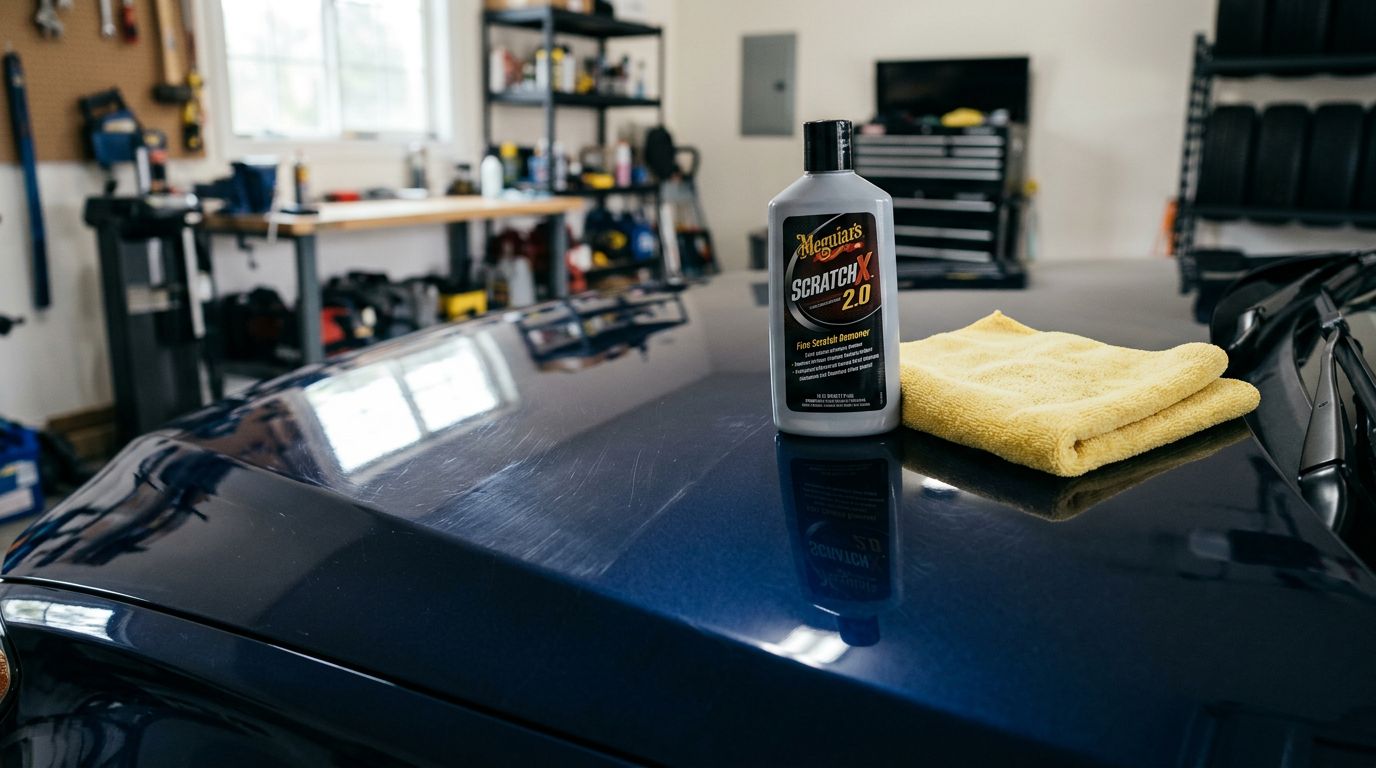
Polish does not add a protective layer on its own. That is why polishing is almost always followed by a wax, sealant, or ceramic coating. Here is what a good polish can do for your car.
- Remove swirl marks and light oxidation from the clear coat
- Reduce the look of fine scratches across a panel
- Restore depth and gloss to faded paint
- Smooth the surface so wax or coating bonds better
- Clean up water spots and light staining
- Bring back that showroom shine on older vehicles
When Should You Use Scratch Remover vs Polish?
The right choice depends on what problem you are trying to fix. Here is how we break it down for our customers across San Luis Obispo, Grover Beach, and the rest of the Central Coast.
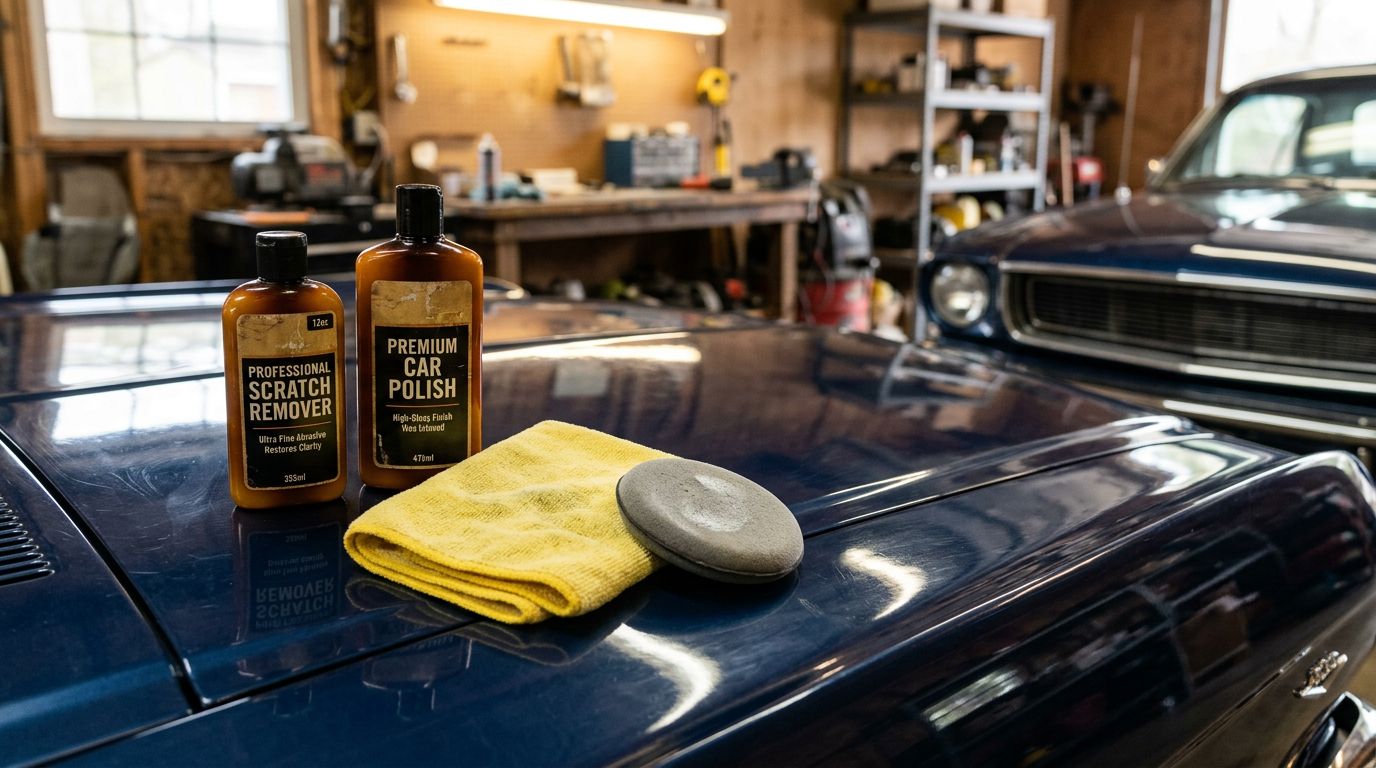
Reach for Scratch Remover When
You have one or two specific scratches that bug you. Maybe a shopping cart bumped your door or a branch dragged across the fender. If the mark is light and sits in the clear coat, a scratch remover is your targeted tool. It focuses on that one spot rather than the whole panel.
Reach for Polish When
Your paint looks dull, hazy, or covered in swirl marks. Polish is the better call when the problem is spread out over a large area. If your car has lost its shine or has that cloudy look under sunlight, polish will bring it back to life across the board.
When You Might Need Both
Sometimes a car has both a few deeper scratches AND general dullness. In that case you may want to spot treat with a scratch remover first, then polish the whole panel to blend everything together. We will cover how to combine them next.
When to Call a Professional
If the scratch is deep enough to catch your fingernail, or if you are dealing with a lot of damage, a DIY product may not cut it. Deeper correction often requires machine polishing and experience. That is where a professional service comes in to avoid burning through your clear coat.
Can You Use Scratch Remover and Polish Together?
Yes, and in many cases using them together gives the BEST result. The idea is to fix the worst spots first with a more aggressive product, then refine the entire surface with a finer polish. This layered approach is basically a simple version of what happens during a full paint correction. Just be careful not to overdo it, since every pass removes a little clear coat.
Here is a simple order of operations if you want to use both at home.
- Wash and dry the vehicle completely to remove all dirt and grit.
- Identify the scratches that need spot treatment and mark them mentally.
- Apply scratch remover to those specific spots and work it in as described earlier.
- Wipe off the residue and check that the scratches have improved.
- Now apply polish to the entire panel to blend the repaired area with the rest.
- Buff off the polish with a clean microfiber towel until the finish is even.
- Finish with a wax, sealant, or ceramic coating to protect your work.
That last step matters a lot. Polishing and scratch removal expose fresh clear coat, so adding protection helps it stay looking good longer. This is why we always finish our detailing jobs with a protective layer.
What Are the Best Scratch Removers and Polishes?
There is no single product that wins for everyone. The best choice depends on your paint, the severity of the issue, and whether you are working by hand or by machine. Instead of naming brands, we will explain what to look for so you can shop smart.
What to Look for in a Scratch Remover
Look for a product that clearly states it works on clear coat scratches. Check whether it uses abrasives, fillers, or both. Abrasive-based removers give more lasting results, while filler-heavy products may fade after a few washes. If you want a real fix rather than a temporary cover-up, lean toward an abrasive formula.
What to Look for in a Polish
For polish, pay attention to the cut level. A light polish or finishing polish is great for boosting gloss and removing fine swirls. A heavier compound is meant for tougher defects but requires more care. If you are new to this, start with a lighter polish. You can always step up if it is not enough, but you cannot put clear coat back on.
Hand Application vs Machine
Many polishes and scratch removers can be applied by hand for small jobs. But for larger areas or deeper defects, a machine polisher does a far better and more even job. Machine work also takes skill, since too much heat or pressure can damage paint. If you are not comfortable, this is a great time to let a professional handle it.
When Professional Paint Correction Makes Sense
If your car has heavy swirls, deep scratches, or years of neglect, a professional paint correction will get you results that store products simply cannot match. We handle paint correction, scratch removal, and paint polishing as part of our detailing services across the Central Coast. Pairing that with a ceramic coating helps keep the finish protected for the long haul.
Conclusion
So, is scratch remover the same as polish? No. A scratch remover targets specific marks in your clear coat, while polish refines the whole surface and brings back shine. They use similar abrasive technology but serve DIFFERENT purposes, and they often work best together. Spot treat the scratches, polish the panel, then protect it all with wax or a coating.
If your paint needs more than a quick fix, or you simply want that showroom look without the guesswork, our team at Aj’s Auto Detailing is here to help. We offer mobile detailing, paint correction, scratch removal, and ceramic coating throughout San Luis Obispo, Pismo Beach, Santa Maria, and the surrounding areas. Reach out today and let us bring your car’s finish back to life.