How To Remove Scratch From Car Without Polish (Easy DIY Fixes)
Few things bum out a car owner faster than spotting a fresh scratch on their paint. The good news? You can often learn how to remove scratch from car without polish using simple items you already have at home. Not every scratch needs a buffer, a compound, or a trip to the shop. Some of them just need a little patience and the right technique.
At Aj’s Auto Detailing in San Luis Obispo, we help drivers all over the Central Coast keep their cars looking sharp. In this guide, we will walk you through easy DIY fixes for light scratches, when household items actually work, and when it is smarter to call in a pro. Let’s dig in.
What Types of Car Scratches Can Be Fixed Without Polish
Before you grab any product, you need to know what kind of scratch you are dealing with. Car paint has layers. There is the clear coat on top, then the base color coat, then the primer, and finally the metal underneath. The DEPTH of the scratch decides whether a no-polish fix will work.
Light surface scratches that only touch the clear coat are the easiest to handle at home. Deeper scratches that reach the paint or primer usually need more attention. Here is a quick breakdown of what you can typically tackle without polish.
- Clear coat scratches – These sit only in the top protective layer. Run your fingernail across the mark. If your nail does NOT catch, it is likely shallow and DIY-friendly.
- Light swirl marks – Fine circular marks from improper washing or dirty towels. Many of these can be improved at home.
- Surface scuffs – Marks left when another object rubs against your paint, like a shopping cart or a garage wall. These are often transferred material, not deep damage.
- Hairline scratches – Tiny, thin lines that barely show up in the shade but pop out in sunlight.
If your nail catches in the groove, the scratch is deeper. Those cases may still improve with a repair pen, but full correction usually calls for professional work.
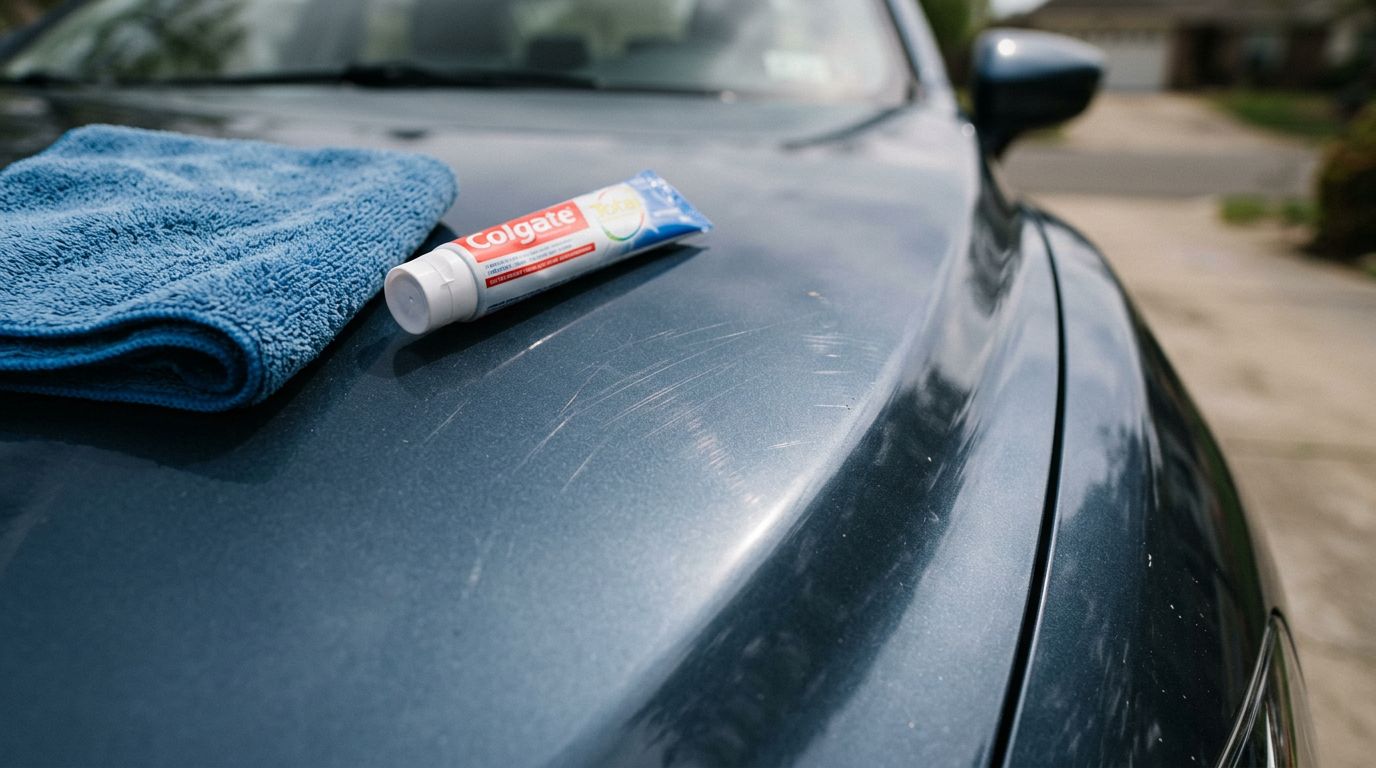
How To Remove Light Scratches From a Car Using Toothpaste
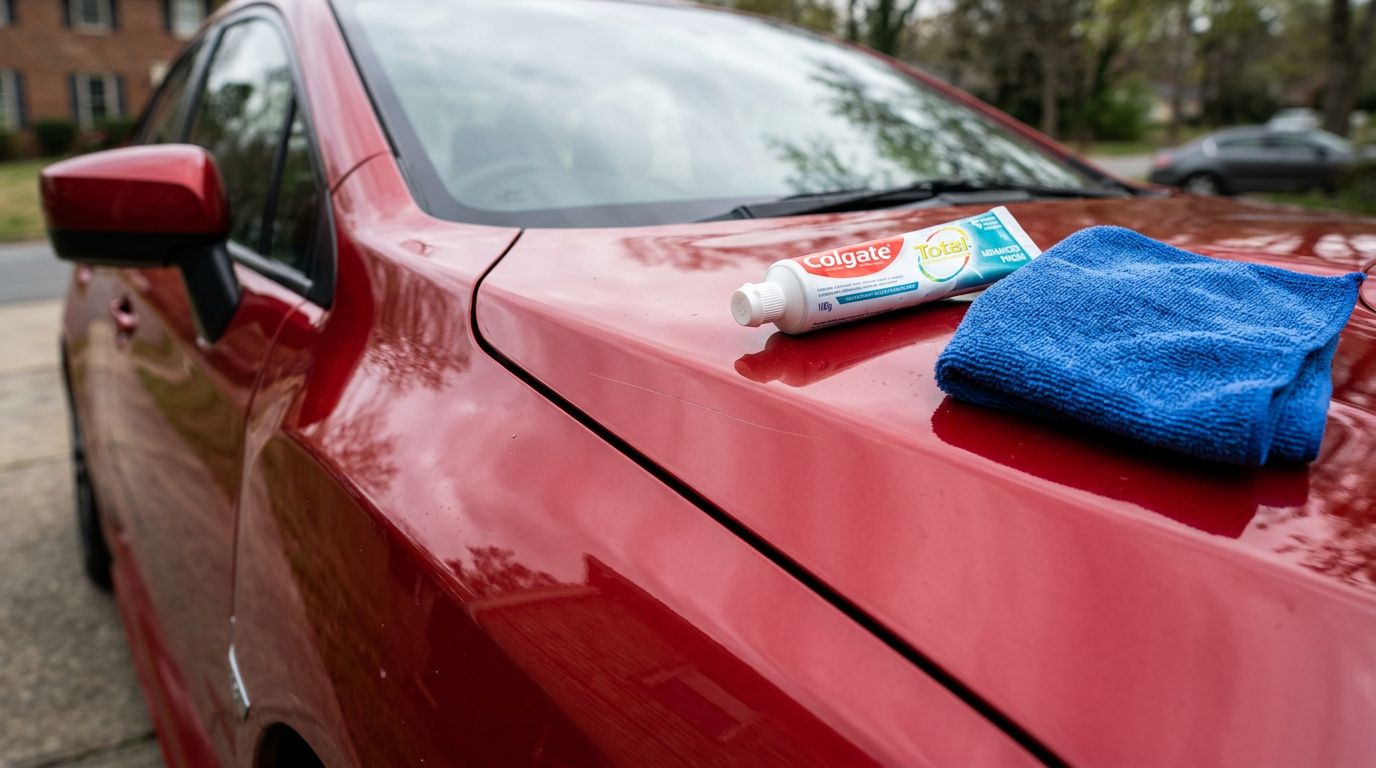
Toothpaste is a classic DIY trick, and it actually works for very light clear coat scratches. Why? Regular whitening toothpaste contains mild abrasives. Those tiny particles gently smooth the edges of a shallow scratch so it blends into the surrounding clear coat. It is basically a super mild polish that lives in your bathroom.
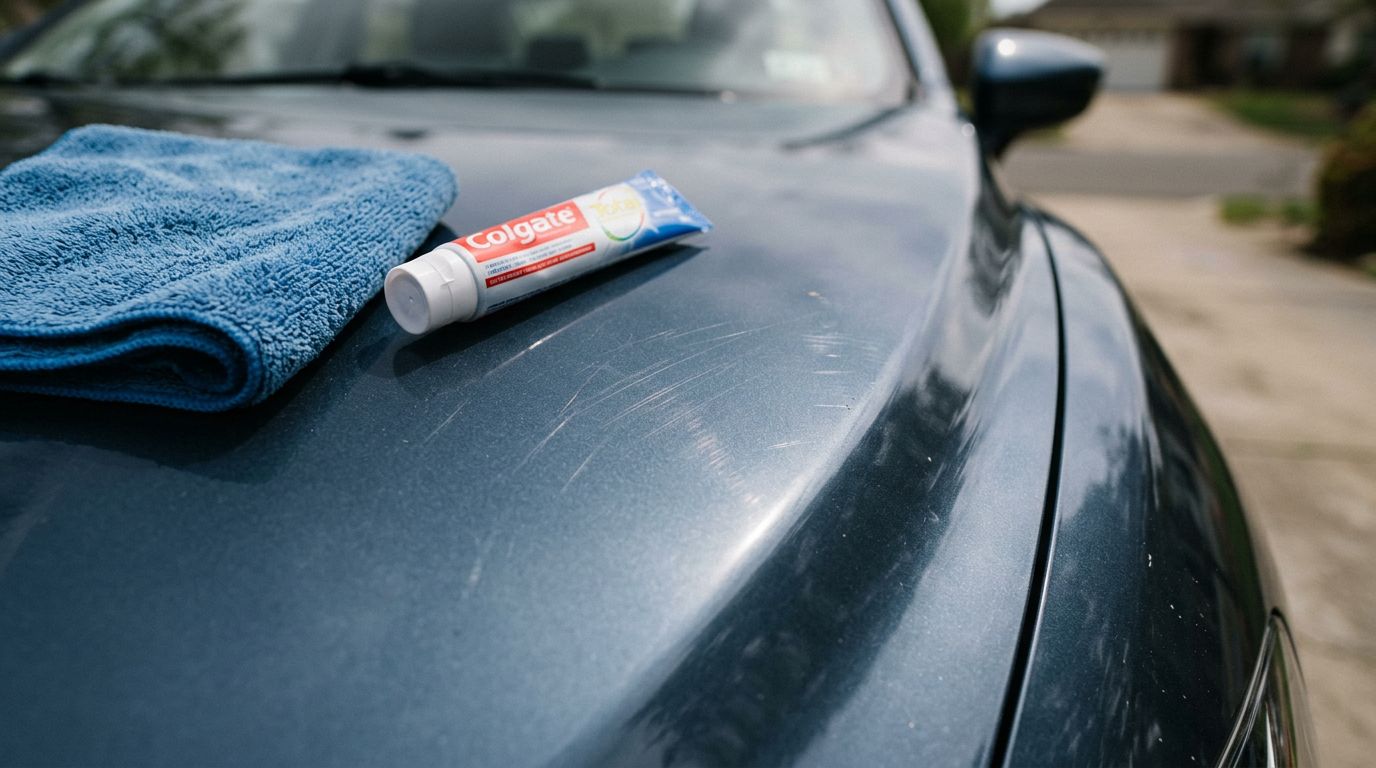
This works best on small, shallow marks. Do not expect miracles on deep gouges. Here is how to do it step by step.
- Wash the area first. Clean the scratched spot with car soap and water. Dirt and grit will make things WORSE if you skip this. Dry it fully with a clean microfiber towel.
- Grab whitening toothpaste. A standard whitening paste works better than gel. You only need a small dab.
- Apply to a damp microfiber cloth. Put a pea-sized amount of toothpaste on a clean, slightly damp microfiber towel.
- Rub in small circles. Work the toothpaste over the scratch using light pressure and small circular motions. Do this for about 30 seconds.
- Wipe and check. Wipe the spot clean with a fresh damp cloth. Look at the scratch in good light to see if it improved.
- Repeat if needed. You can repeat the process a few times. Just do not overdo it. Too much rubbing in one spot can thin the clear coat.
- Dry and inspect. Once you are happy, dry the area and take one final look in the sunlight.
Toothpaste will not fix everything, but for hairline scratches and light scuffs, it can make a real difference. Best of all, it costs almost nothing to try.
Can You Fix Car Scratches With Household Items
Yes, several everyday items can help with light scratches and scuffs. Just keep your expectations realistic. Household items are good for MINOR damage. They will not repair deep scratches that reached the paint or metal. Here are a few options worth trying.
Baking Soda Paste
Mix baking soda with a little water to form a paste. It works a lot like toothpaste since it is mildly abrasive. Apply it to a microfiber cloth and rub the scratch gently in circles. Wipe clean and check your progress. This is great for light surface marks.
Scratch-Removing Erasers or Magic Sponges
These melamine sponges can lift scuff marks left by other objects. They are more about removing TRANSFERRED material than fixing the paint itself. Use them lightly and with water. Pressing too hard can dull your finish, so go easy.
Vinegar for Cleaning First
Vinegar itself does not remove scratches, but a diluted vinegar and water mix helps clean the area so you can see what is really going on. Sometimes what looks like a scratch is just grime or scuffed-on material that wipes away.
WD-40 or Similar Lubricant for Scuffs
A light spray on a scuff mark can help lift transferred paint or rubber from another surface. Spray it on a cloth, wipe gently, then wash the area with soap afterward to remove any residue. This is a cleaning fix, not a paint repair.
Nail Polish for Tiny Chips
For very small chips, clear nail polish can seal the spot and stop moisture from creeping in. It is a temporary fix, not a true color match. But it can protect the area until you get a proper repair.
The golden rule with household items: START GENTLE. Always use clean microfiber cloths, work in small motions, and test in a hidden spot first if you are unsure.
How To Use a Scratch Repair Pen Instead of Polish
A scratch repair pen is one of the easiest tools for fixing minor scratches without any polishing. These pens apply a clear coat or touch-up formula directly into the scratch. They are handy for filling in fine lines and blending marks so they are far less noticeable. You can find them at most auto parts stores and online.
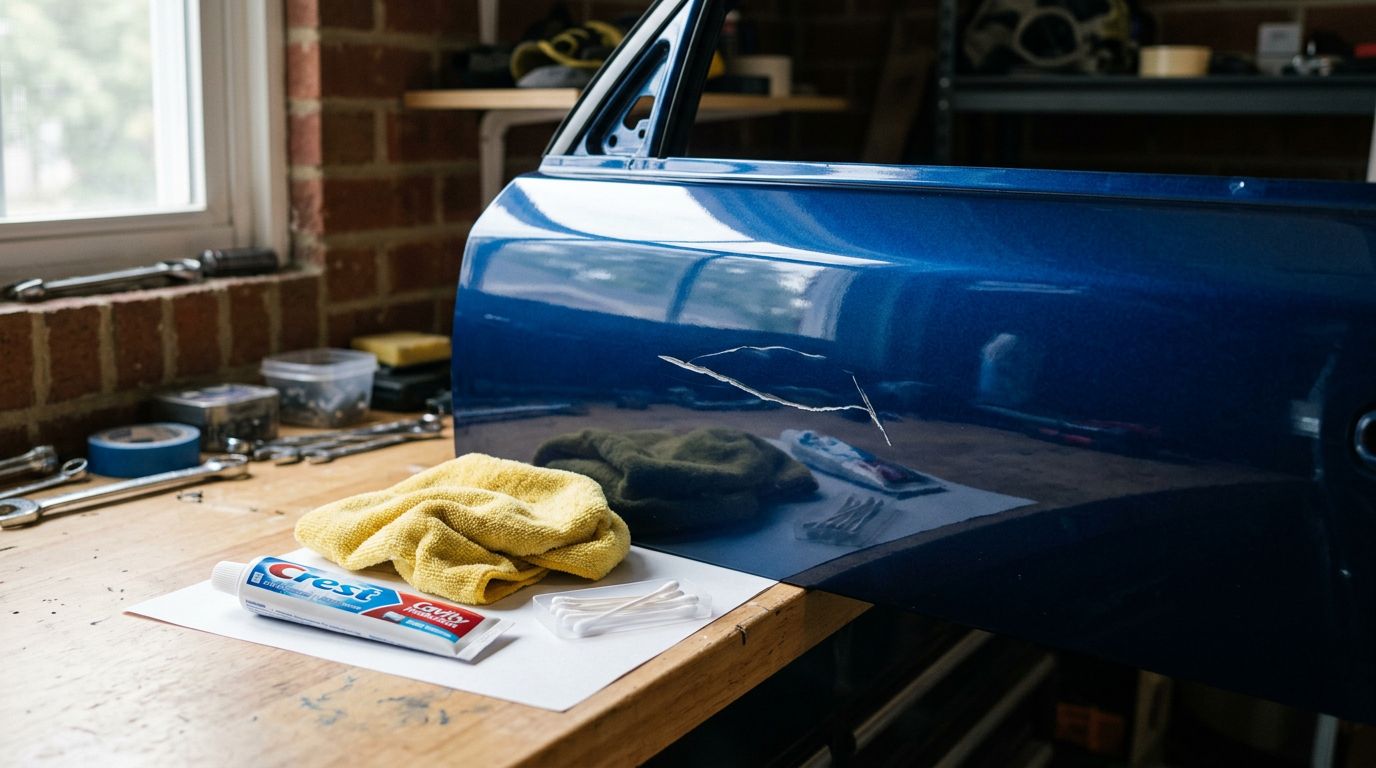
Pens work best on light to moderate scratches. For deeper scratches with color loss, you may need a color-matched touch-up pen too. Here is how to use one the right way.
- Clean the scratch. Wash and dry the area completely. The scratch and the paint around it must be free of dirt and wax.
- Shake the pen well. Most pens need a good shake to mix the formula inside. Follow the directions on the package.
- Test on a hidden spot. Try the pen somewhere out of sight first to make sure the finish looks right.
- Apply along the scratch. Slowly run the pen tip along the length of the scratch. Use steady, light pressure so the product fills the groove.
- Wipe off the excess. Use a clean microfiber cloth to gently remove any product that spread beyond the scratch.
- Let it cure. Give the pen product time to dry and harden. Check the package for the exact cure time and avoid washing the car during that window.
- Add a second pass if needed. For slightly deeper lines, a second thin coat can help. Let each layer dry before adding another.
Scratch pens are affordable and beginner-friendly. Just remember that they hide and fill scratches rather than fully erasing them. For a flawless result on visible panels, a professional touch is hard to beat.
When Should You See a Professional for Car Scratch Repair
DIY fixes are great for minor stuff. But some scratches need real tools and trained hands. Trying to fix a deep scratch yourself can sometimes make it look worse or expose your paint to rust. Knowing when to step back saves you money and stress in the long run.
At Aj’s Auto Detailing, we offer scratch removal and paint correction for drivers across San Luis Obispo, Pismo Beach, Santa Maria, Grover Beach, Arroyo Grande, and the surrounding areas. Here are signs it is time to call a pro.
- Your fingernail catches the scratch. That means it cut past the clear coat and DIY tricks probably will not fully fix it.
- You see different colors in the groove. If you spot primer (often gray or white) or bare metal, the damage is deep and needs proper attention.
- The scratch is long or across a large area. Big scratches are tough to blend evenly by hand.
- There are heavy swirl marks or dull spots all over. Widespread damage usually calls for professional paint correction.
- DIY attempts made it look worse. If your fix left cloudiness or new marks, a pro can restore the finish.
- You want a showroom result. When appearance really matters, professional paint polishing and correction deliver the cleanest outcome.
Professionals can assess the depth of the scratch, choose the right approach, and protect the surrounding paint. In many cases, a proper repair also pairs nicely with a protective option like ceramic coating to help guard against future damage.
How To Prevent Future Scratches on Your Car
The best scratch is the one that never happens. A few simple habits can keep your paint looking clean for years. Prevention is way cheaper and easier than repair. Here are our top tips for keeping scratches off your car.
- Wash the right way. Use the two-bucket method, one for soapy water and one for rinsing your mitt. This keeps grit from grinding into your paint.
- Use clean microfiber towels. Rough or dirty towels are a top cause of swirl marks. Keep a stack of clean microfiber cloths on hand.
- Skip automatic brush car washes. Those spinning brushes trap dirt and can leave swirls all over your finish.
- Dry gently. Pat and glide rather than scrubbing. Never wipe a dry car with a dirty cloth.
- Park smart. Choose spots away from cart returns and tight spaces where doors can ding you.
- Keep the paint protected. A layer of wax, sealant, or ceramic coating adds a sacrificial barrier that helps resist light marks.
- Address dirt fast. Bird droppings, tree sap, and road grime can etch paint over time. Clean them off sooner rather than later.
- Schedule regular detailing. Routine care keeps your paint in top shape and helps you catch small issues before they grow.
Small habits add up. Protecting your paint now means fewer scratches and less repair work down the road.
Conclusion
Learning how to remove scratch from car without polish is totally doable for light marks. Toothpaste, baking soda paste, and scratch repair pens can all help with shallow scratches and scuffs. Just remember the fingernail test. If it catches, or if you see color or metal in the groove, it is time to bring in a professional.
At Aj’s Auto Detailing, we handle scratch removal, paint correction, ceramic coating, and full mobile detailing across San Luis Obispo and nearby Central Coast towns. If your car needs more than a quick DIY fix, reach out and let us help your paint look its BEST. Your car will thank you.