Paint Correction vs Clay Bar: Which One Do You Need? (2026)
If you have ever run your hand across your car’s paint and felt tiny bumps or noticed swirl marks under the sun, you are not alone. Two of the most common terms we hear at Aj’s Auto Detailing in San Luis Obispo are “paint correction” and “clay bar.” People often use them like they mean the same thing. They do not. Understanding the difference between paint correction vs clay bar treatment can save you money and help your car look its absolute best.
We work on cars all over the Central Coast, and we get this question almost every week. So let’s break it all down in plain language. By the end of this article, you will know exactly which service your vehicle needs in 2026.
What Is Paint Correction and How Does It Work?
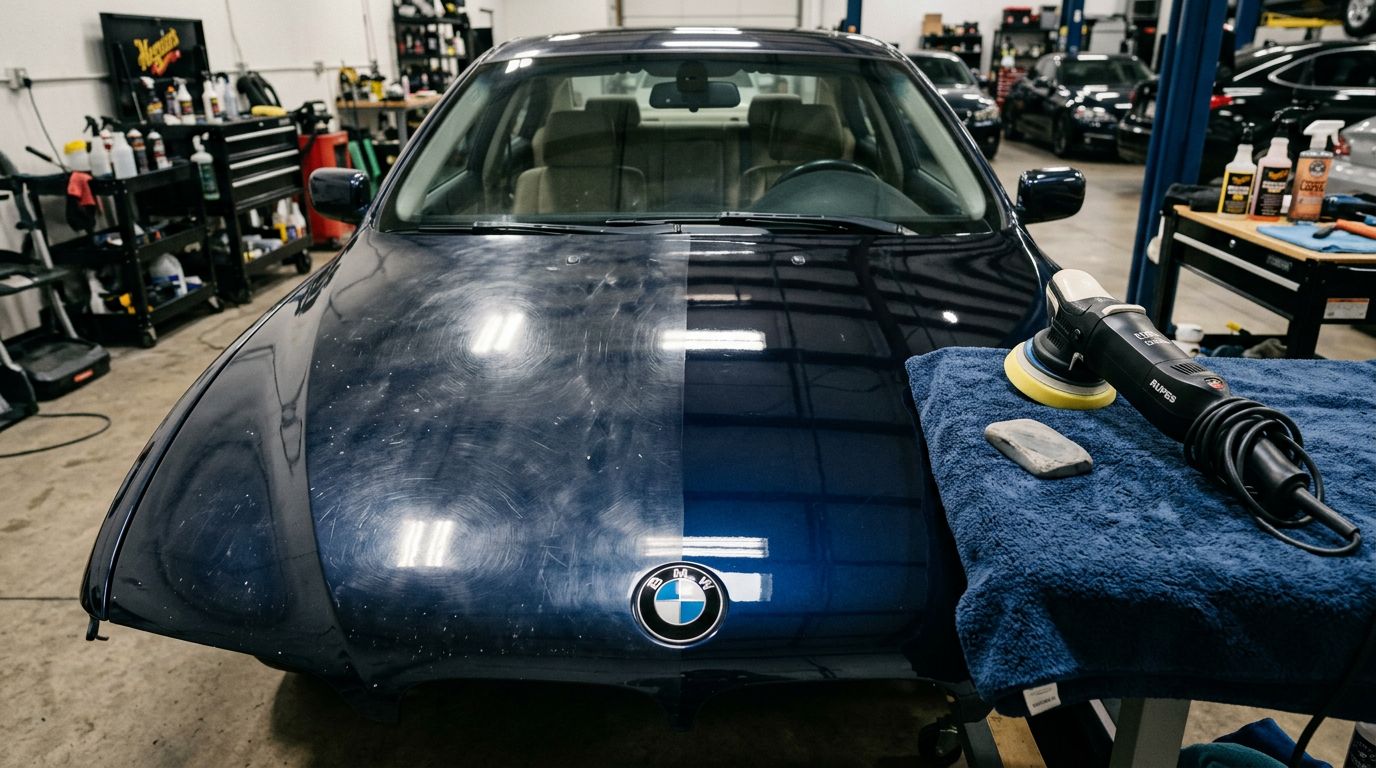
Paint correction is the process of removing imperfections from your car’s clear coat and paint using machine polishers and specialized compounds. It is a multi-step process that levels out the surface of your paint. Think swirl marks, light scratches, water spots, and oxidation. Paint correction actually removes a tiny layer of clear coat to make those flaws disappear. When it is done right, your paint looks deeper, glossier, and almost wet.
This is skilled work. It takes the right tools, the right pads, and a lot of experience to avoid burning through the clear coat. Our team handles professional paint correction in San Luis Obispo with the care your vehicle deserves. Here is what paint correction typically fixes:
- Swirl marks from improper washing or automatic car washes
- Light and medium scratches that have not gone through the clear coat
- Oxidation that makes older paint look dull and faded
- Water spots and mineral etching from sprinklers or hard water
- Buffer trails left behind by a previous bad polish job
- Hazing and dullness that dulls the overall shine
What Is a Clay Bar and What Does It Remove?
A clay bar is a soft, moldable bar of resin that glides across your paint to pull out contaminants stuck ABOVE the surface. It does not remove scratches or swirls. Instead, it grabs the tiny particles that regular washing leaves behind. If your paint feels rough or gritty even after a good wash, a clay bar is what smooths it back out.
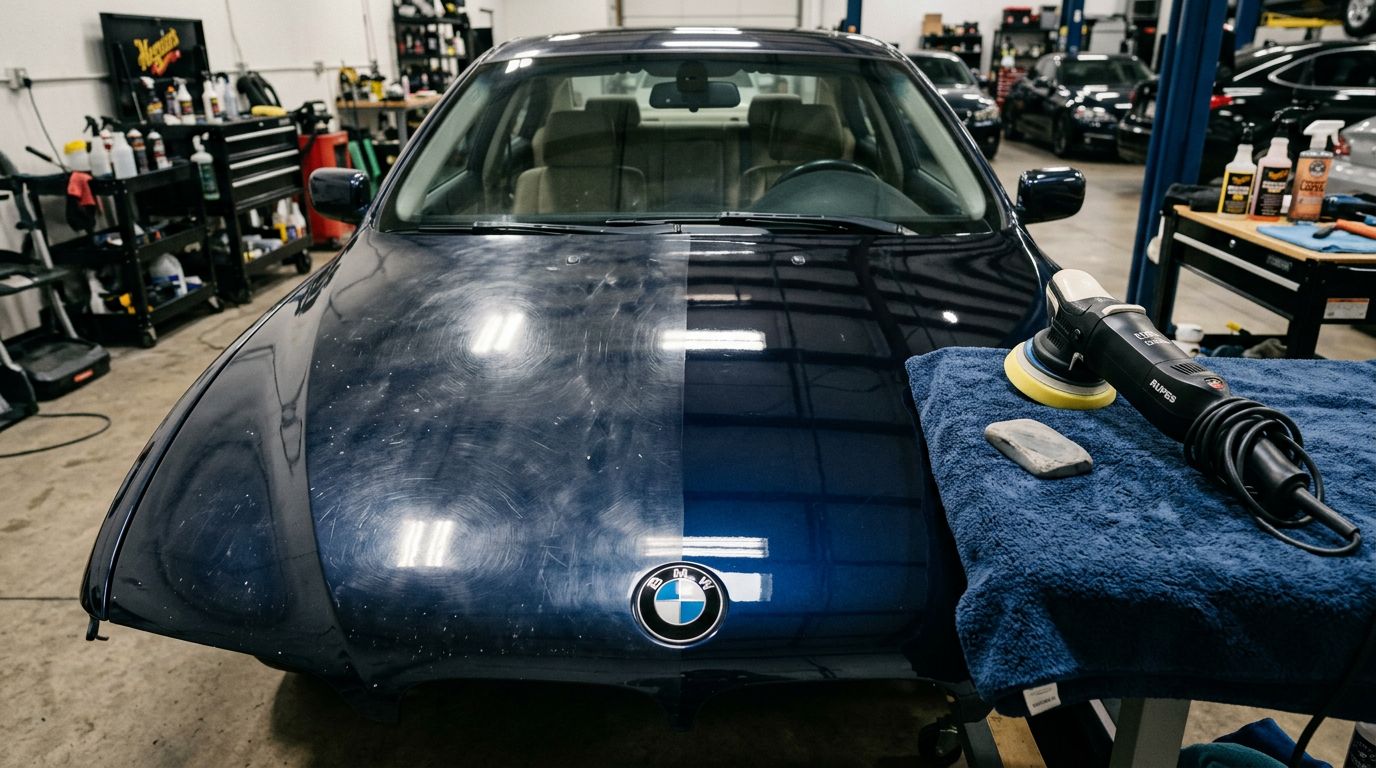
The clay bar treatment is a step in the decontamination process. It is often done before waxing, polishing, or applying a ceramic coating. Clay does not fix the paint itself; it just cleans it deeper than soap and water can. Here is what a clay bar removes:
- Industrial fallout like metal shavings and brake dust
- Overspray from nearby painting or construction
- Tree sap and stubborn organic residue
- Rail dust and airborne metal particles
- Bug residue that stays bonded after washing
- Environmental grime that makes paint feel rough
Key Differences Between Paint Correction and Clay Bar Treatment
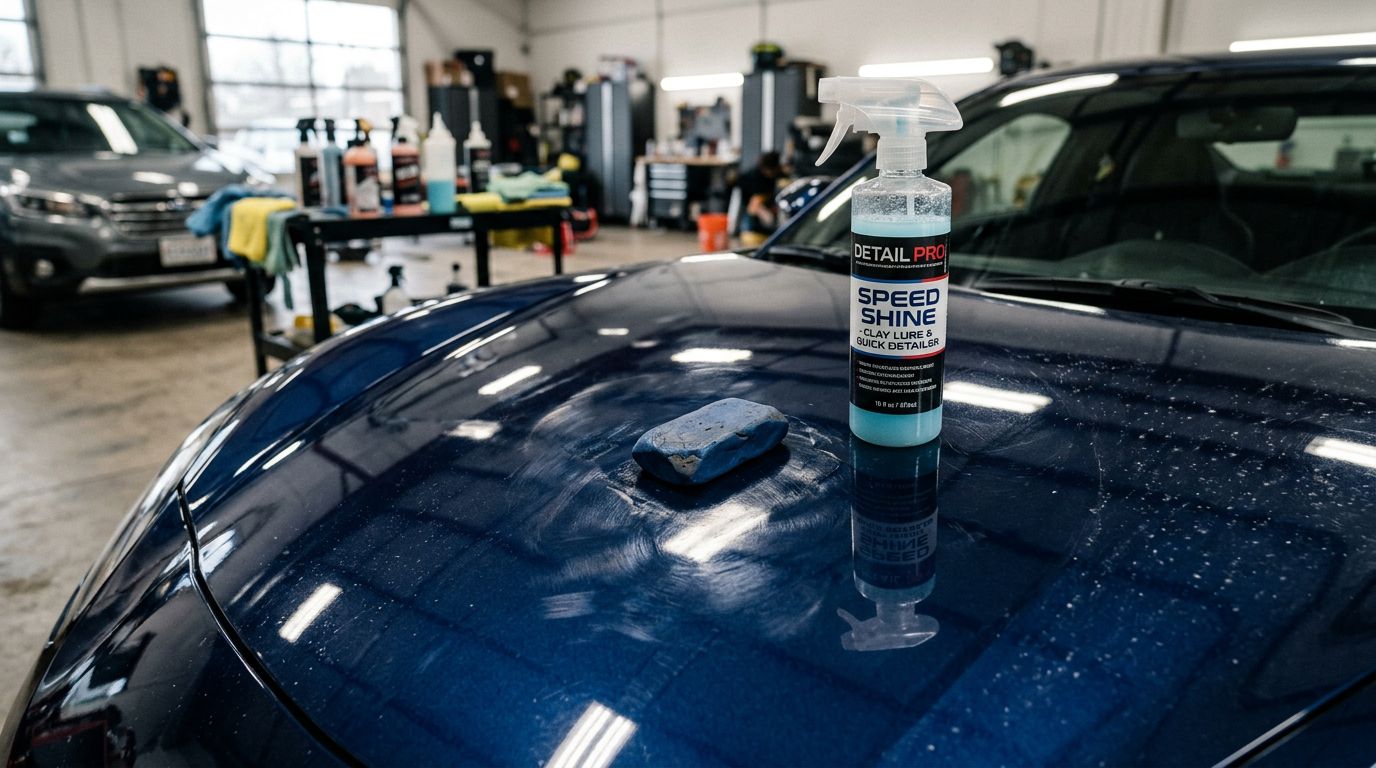
The biggest difference comes down to WHAT they fix and HOW deep they go. A clay bar cleans the surface. Paint correction actually reshapes the surface by removing a microscopic layer of clear coat. One is a cleaning step. The other is a repair step. Most quality detail jobs use both, but they serve completely different purposes. If you want to understand how these fit into a full package, our exterior detailing services in San Luis Obispo combine decontamination and correction as needed.
| Feature | Clay Bar | Paint Correction |
|---|---|---|
| What it does | Removes bonded contaminants on the surface | Removes scratches, swirls, and oxidation |
| Depth | Works on top of the clear coat | Removes a thin layer of clear coat |
| Fixes swirls? | No | Yes |
| Fixes rough texture? | Yes | Not the main goal |
| Tools needed | Clay bar and lubricant | Machine polisher, pads, compounds |
| Time required | 30 to 60 minutes | Several hours to a full day |
| Skill level | Beginner friendly | Advanced, best left to pros |
When Do You Need Paint Correction vs a Clay Bar?
Knowing which service to book depends on what you see and feel on your paint. Let’s walk through a few common situations so you can decide.
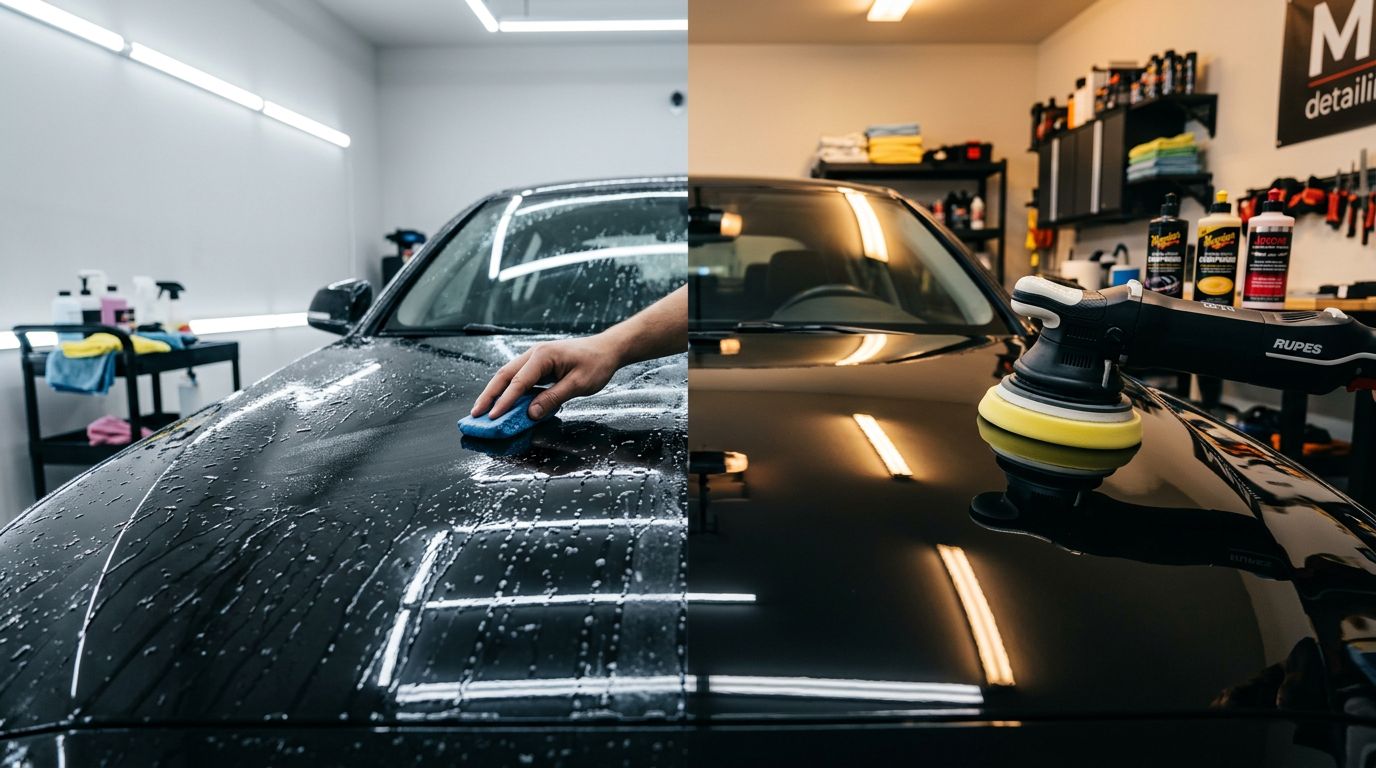
You Need a Clay Bar When…
Your paint feels rough or bumpy after washing. You can do a quick test. Slide your fingers over a clean, dry panel. If it feels like sandpaper instead of glass, you have contamination that needs claying. This is common if you park under trees, near construction, or drive a lot of highway miles. A clay bar treatment brings back that smooth feel fast.
You Need Paint Correction When…
You see swirl marks, spider webbing, or scratches under direct sunlight. If your paint looks dull, hazy, or covered in tiny circular marks, a clay bar will NOT fix it. You need paint correction. Our expert paint polishing services can restore that mirror finish and bring the color back to life.
You Need Both When…
Honestly, most cars benefit from both. We almost always clay the paint before doing correction. Why? Because polishing over trapped contaminants can create more scratches. Claying first gives us a clean canvas to work on. If you are prepping for a ceramic coating, both steps are essential.
You Have a New Car
Even brand new cars off the lot can have swirls from dealership washes and rough paint from shipping. A clay bar plus a light correction gets your new ride into truly perfect condition before you seal or coat it.
How Much Do Paint Correction and Clay Bar Services Cost in 2026?
Pricing depends on the size of your vehicle, the condition of the paint, and how many correction steps are needed. A clay bar treatment is affordable and often bundled into a wash or detail package. Paint correction costs more because it takes hours of skilled labor and premium products. In 2026, here is a general idea of what you can expect across the Central Coast, from San Luis Obispo to Santa Maria and Pismo Beach.
- Clay bar treatment alone: roughly $50 to $120 depending on vehicle size
- Clay bar bundled with a wash: often a small add-on to your detail package
- Single-stage paint correction: around $300 to $600 for most vehicles
- Two-stage paint correction: roughly $600 to $1,000 for deeper defects
- Multi-stage or show-car correction: $1,000 and up for severe cases
- Correction plus ceramic coating package: priced together for the best value
Keep in mind these are estimates. The best way to get an accurate number is a quick inspection so we can see the actual paint condition. A car with light swirls costs far less to correct than one with deep scratches and heavy oxidation.
Can You Do Paint Correction and Clay Bar Treatment at Home?
You can absolutely do a clay bar at home. It is one of the safest DIY detailing tasks out there. Paint correction is a different story. It requires a machine polisher, the right pads, and real experience to avoid permanent damage. A beginner can burn through clear coat in seconds. If you want to try the clay bar yourself, here is a simple step-by-step to do it right.
- Wash and dry your car completely. Start with a clean surface so you do not drag dirt around.
- Get a clay bar kit and clay lubricant. Never use clay dry; it MUST stay lubricated.
- Spray a small section with the lubricant. Work in areas about two feet by two feet.
- Glide the clay gently back and forth over the wet surface. Do not press hard. Let the clay do the work.
- Feel for smoothness. The clay grabs at first, then glides smoothly once the area is clean.
- Fold the clay often to expose a fresh, clean surface. Drop it? Throw it away. Dirt in clay scratches paint.
- Wipe the panel dry with a clean microfiber towel and move to the next section.
- Seal your paint afterward with wax or sealant since claying removes protection.
The clay bar is easy. But when it comes to correction, leave it to trained hands. One mistake with a polisher can cost you a full repaint. That is a risk that just is not worth it for most people.
Conclusion
Here is the simple takeaway. A clay bar cleans contaminants OFF your paint. Paint correction removes swirls, scratches, and oxidation FROM your paint. One is a cleaning step, and the other is a repair step. Most cars look their best when both are done together, especially before a ceramic coating. If your paint feels rough, you likely need clay. If it looks dull or swirled, you need correction.
At Aj’s Auto Detailing, we serve San Luis Obispo, Pismo Beach, Santa Maria, King City, Grover Beach, Lompoc, Goleta, Arroyo Grande, and Avenal with mobile detailing that comes right to you. Ready to bring back that showroom shine? Reach out to book your appointment and let us make your car look brand new again.